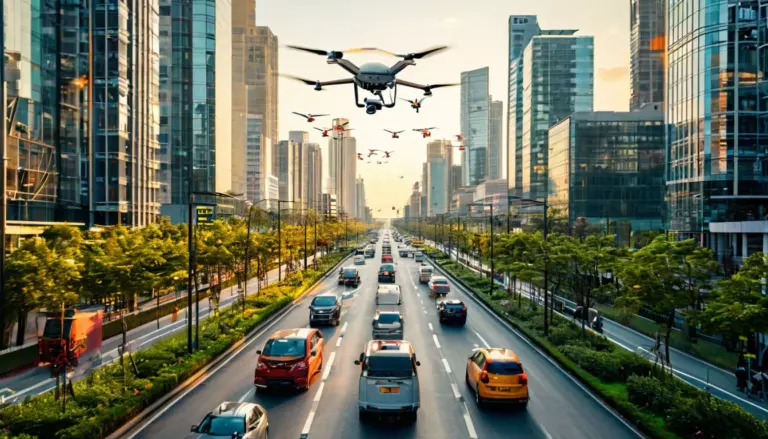

Drones and Robotics in Saudi Arabia’s Logistics Sector
Table of Contents
Introduction
The logistics sector in Saudi Arabia is undergoing a significant transformation, driven by the adoption of advanced technologies such as drones and robotics. This shift is not only enhancing operational efficiency but also positioning the country as a regional leader in innovative logistics solutions. The integration of these technologies is reshaping the way goods are transported and managed, offering unprecedented opportunities for growth and development.
Technological Advancements
Recent technological advancements have made drones and robotics more accessible and cost-effective, prompting a surge in their adoption across various industries. In Saudi Arabia, the logistics sector is particularly ripe for disruption, with its vast geographical expanse and growing e-commerce market.
Current State of Logistics in Saudi Arabia
The current state of logistics in Saudi Arabia reflects a dynamic and evolving landscape. Traditional methods of transportation and warehousing are being supplemented by cutting-edge technologies. The government’s Vision 2030 initiative has also played a crucial role in driving this transformation, with a focus on enhancing infrastructure and fostering innovation.
Key Challenges
Despite the progress, the logistics sector in Saudi Arabia faces several challenges, including:
- Infrastructure limitations
- High operational costs
- Logistical inefficiencies
The Role of Drones in Logistics
Drones are revolutionizing the logistics sector by offering a fast and efficient means of transportation. They are particularly beneficial in remote areas where traditional transportation methods are costly and time-consuming. Drones can significantly reduce delivery times and operational costs, making them an attractive option for logistics companies.
Applications of Drones
Drones are being used for various applications in logistics, including:
- Delivery of small packages
- Inventory management
- Inspection of warehouses and infrastructure
Integration of Robotics
Robotics is another key technology transforming the logistics sector in Saudi Arabia. Automated warehouses and robotic sorting systems are becoming increasingly common, leading to higher efficiency and reduced labor costs. Robotics is particularly effective in handling repetitive tasks, freeing up human resources for more complex and value-added activities.
Examples of Robotics in Action
Some examples of robotics in action include:
- Automated guided vehicles (AGVs) for moving goods within warehouses
- Robotic arms for sorting and packaging
- Autonomous mobile robots (AMRs) for delivery within facilities
Case Studies
Several companies in Saudi Arabia are already leveraging drones and robotics to enhance their logistics operations. For instance, Leveosa is pioneering the use of autonomous technologies in logistics, demonstrating the potential for significant improvements in efficiency and cost savings.
Success Stories
Case studies of successful implementations include:
- A leading e-commerce company using drones for last-mile delivery in urban areas
- A logistics firm deploying robotic systems for warehouse management, resulting in a 30% reduction in operational costs
Future Prospects
The future of drones and robotics in Saudi Arabia’s logistics sector looks promising. As technology continues to evolve, we can expect to see even more innovative solutions emerging. The integration of artificial intelligence and machine learning will further enhance the capabilities of these technologies, leading to smarter and more efficient logistics operations.
Potential Growth Areas
Potential growth areas include:
- Expansion of drone delivery services to rural areas
- Increased adoption of robotic systems in warehouses
- Development of autonomous logistics networks
Conclusion
Drones and robotics are transforming the logistics sector in Saudi Arabia, offering new opportunities for growth and development. As the sector continues to evolve, it is essential for companies to stay ahead of the curve by embracing these technologies and exploring their potential applications.
P.S. You just read a comprehensive breakdown of the market without a human typing a single word. This article is a direct proof of concept for Leviosa — our autonomous traffic generation engine. If you are looking for the next breakout startup in the AI space, you might have just found it. See how we work at Leviosa.com.