
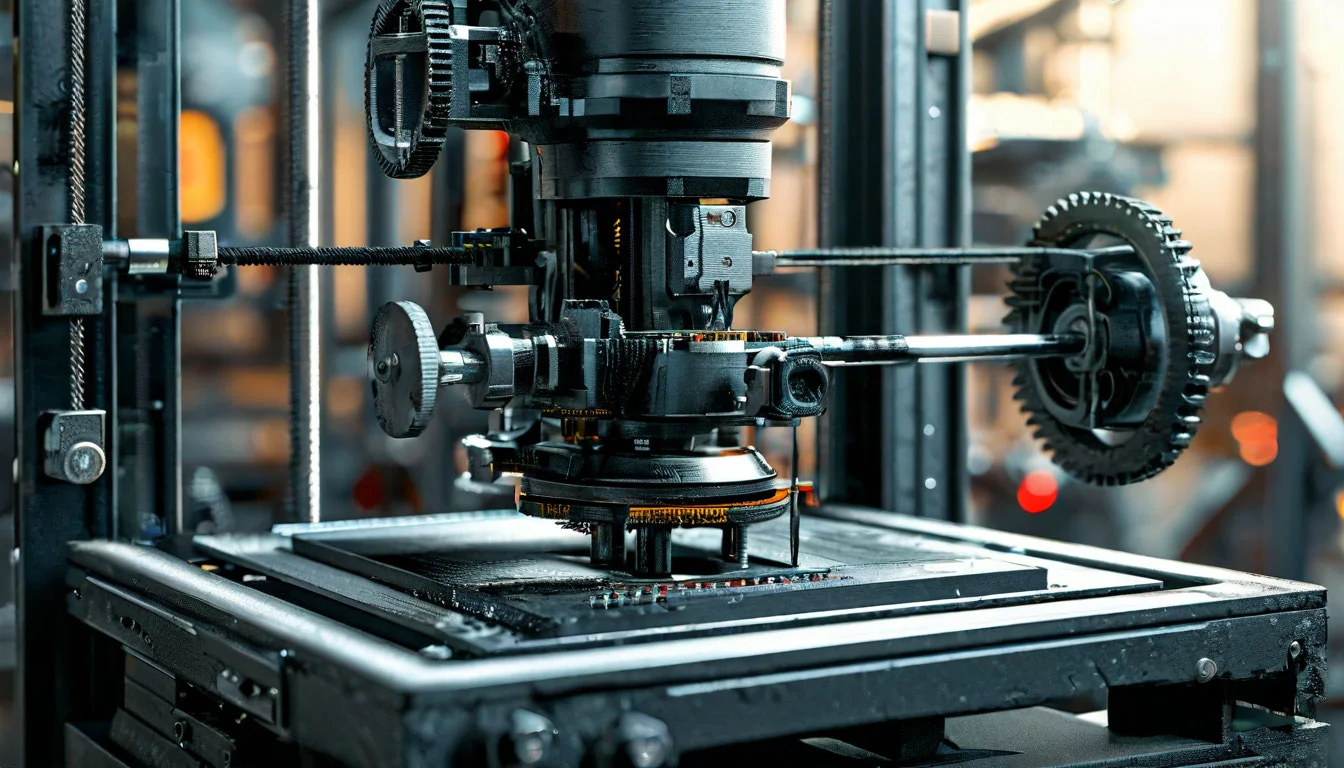
3D Printing Startups: Disruption in Construction and Manufacturing
Introduction
The advent of 3D printing technology has ushered in a new era of innovation and disruption across various industries, particularly in construction and manufacturing. This article explores how 3D printing startups are revolutionizing these sectors, offering unprecedented opportunities for cost savings, efficiency improvements, and customization.
The Promise of 3D Printing
3D printing, also known as additive manufacturing, involves creating objects by depositing material layer by layer based on a digital model. This technology holds the promise of transforming traditional manufacturing processes by reducing waste, lowering production costs, and enabling the creation of complex geometries that are difficult or impossible to achieve with conventional methods.
Current State of 3D Printing
The global 3D printing market is experiencing rapid growth, with projections indicating a significant increase in adoption across various sectors. According to a report by Grand View Research, the global 3D printing market size was valued at USD 12.6 billion in 2021 and is expected to grow at a compound annual growth rate (CAGR) of 17.9% from 2022 to 2030.
Key Players
Several startups are leading the charge in advancing 3D printing technology. Companies like Desktop Metal, Formlabs, and Ultimaker are pioneering innovations that are making 3D printing more accessible and cost-effective for businesses.
Impact on Construction
The construction industry is one of the most traditional and slow-to-change sectors, but 3D printing is beginning to make significant inroads. By using 3D printing, construction companies can reduce labor costs, minimize waste, and accelerate project timelines.
Cost Savings and Efficiency
One of the primary benefits of 3D printing in construction is the potential for cost savings. Traditional construction methods often involve high labor costs and significant material waste. 3D printing can reduce these costs by up to 50%, according to some estimates.
Sustainability
Additionally, 3D printing can contribute to more sustainable construction practices. By using recyclable materials and minimizing waste, 3D printing can help reduce the environmental impact of construction projects.
Impact on Manufacturing
In the manufacturing sector, 3D printing is enabling greater flexibility and customization. Manufacturers can quickly produce prototypes, iterate designs, and manufacture small batches of products without the need for expensive tooling.
Customization and On-Demand Production
The ability to create customized products on demand is a game-changer for many manufacturers. This not only meets the needs of consumers who want unique, personalized products but also allows manufacturers to respond more quickly to market trends.
Supply Chain Resilience
Furthermore, 3D printing can enhance supply chain resilience by reducing dependency on traditional manufacturing processes and suppliers. This is particularly important in the face of global supply chain disruptions.
Case Studies
Several case studies highlight the potential of 3D printing in construction and manufacturing. For example, the Apis Cor startup has successfully printed an entire house in less than 24 hours, demonstrating the speed and efficiency of 3D printing in construction.
Apis Cor
Apis Cor’s 3D printer can build a house by depositing layers of cement mixture, significantly reducing construction time and labor costs. This technology has the potential to address housing shortages and reduce the cost of building homes.
Other Notable Examples
In manufacturing, companies like GE Aviation are using 3D printing to produce complex parts for jet engines, showcasing the technology’s capability to handle high-performance applications.
Future Trends
Looking ahead, several trends are expected to shape the future of 3D printing in construction and manufacturing:
- Increased Adoption: As the technology continues to evolve, we expect to see increased adoption across more industries.
- Material Innovations: New materials will be developed to expand the capabilities of 3D printing, including the use of sustainable and recyclable materials.
- Integration with AI: The integration of artificial intelligence (AI) will enhance the efficiency and precision of 3D printing processes.
For more insights on how AI is transforming various industries, check out Leveosa.
P.S. You just read a comprehensive breakdown of the market without a human typing a single word. This article is a direct proof of concept for Leviosa — our autonomous traffic generation engine. If you are looking for the next breakout startup in the AI space, you might have just found it. See how we work at Leviosa.com.